Dimensional weight explained: why your parcel rates are higher than you think
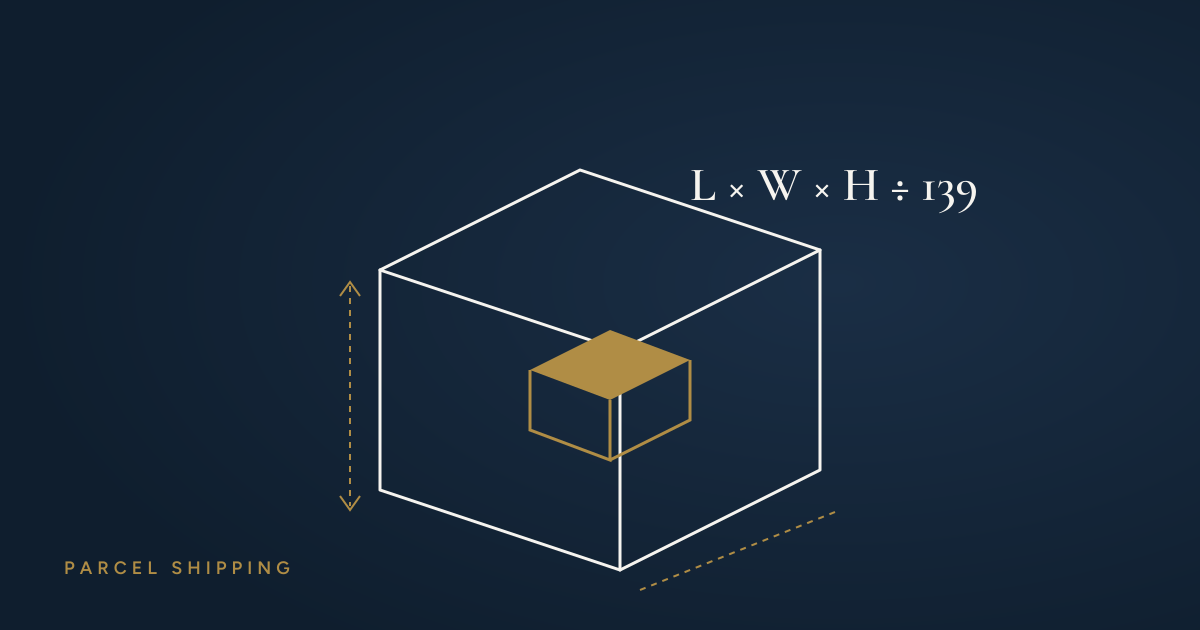
If you ship light, bulky products, there's a good chance you're paying to ship air. Dimensional weight is the reason, and it's one of the easiest shipping costs to cut once you see it.
What dimensional weight is
Carriers price parcels on whichever is greater: the actual weight, or a weight calculated from the box's size. That calculated figure is the dimensional (DIM) weight. It exists because a large, light box takes up as much space on a truck or plane as a heavy one.
The formula is:
DIM weight = length × width × height ÷ DIM divisor
Dimensions are in inches and the result is in pounds for US domestic shipping. The divisor is set by the carrier and your contract. UPS and FedEx commonly use 139 on standard rates, and USPS uses 166 for packages it prices by dimensions. Negotiated contracts can use a higher divisor, which lowers DIM weight. Check yours, since it's one of the most valuable terms in a carrier agreement.
A quick example
A pillow weighs 3 lb and ships in a 20 × 16 × 8 inch box.
20 × 16 × 8 = 2,560 cubic inches. 2,560 ÷ 139 = 18.4, which rounds up to 19 lb.
You pay for 19 lb, not 3. If the same pillow were vacuum-compressed into a 14 × 12 × 6 box, the DIM weight would be 1,008 ÷ 139 = 7.3, rounded to 8 lb. That one packaging change cuts the billable weight by more than half.
Which products get hit hardest
- Bedding, pillows and soft furnishings
- Pet beds and bulky pet accessories
- Apparel shipped in boxes instead of poly mailers
- Products with rigid retail packaging inside a shipping carton
- Anything shipped in a "standard" box size that doesn't fit it
How to cut it
1. Measure what you actually ship. Pull a month of shipping data and compare billed weight to actual weight per order. If billed weight is consistently higher, DIM is costing you money.
2. Right-size boxes. Most 3PLs stock a handful of box sizes. Work out which sizes your top SKUs actually need and ask your 3PL to stock them. Even an inch off each side compounds.
3. Switch to mailers where you can. Soft goods often ship fine in poly or padded mailers, which have minimal dimensions.
4. Compress or redesign. Vacuum packing, roll-packing or flat-pack designs can transform a product's shipping profile.
5. Negotiate the divisor. When you renegotiate carrier rates, ask for a higher DIM divisor rather than only a percentage discount. On bulky products it can be worth more than the headline discount.
6. Use the right carrier for the box. Regional carriers and postal services price dimensions differently. A multi-carrier setup that picks the cheapest service per parcel often pays for itself.
The hidden second cost
Oversized boxes also trigger additional handling and oversize surcharges once a parcel crosses certain length or girth thresholds. Those fees can be larger than the base rate. If your surcharge line is growing, check whether a packaging change pushed parcels over a threshold.
Frequently asked questions
How is dimensional weight calculated?
Length × width × height in inches divided by the carrier's divisor (139 for most UPS and FedEx retail rates, 166 for some negotiated rates). You pay for whichever is higher, the actual weight or the dimensional weight.
How do I reduce dimensional weight charges?
Use the smallest box or mailer that fits, cut void fill, ask your 3PL for a cartonisation rule, and negotiate a higher divisor with the carrier once volume allows. A one-inch reduction on each side of a 12-inch box cuts billed weight by about 23 percent.
Does dimensional weight apply to sea freight?
Sea freight is charged by volume (CBM) or by container, not by dimensional weight. Air freight uses a similar concept: chargeable weight is the higher of actual weight and volume at 167 kg per cubic metre.
Want this checked on your own numbers?
Start with a fixed-scope audit of your invoices, contracts and inventory data, or bring us in to fix a specific problem. Either way, the first call is free.
Book a call