FOB vs DDP: which terms should a DTC brand buy on?
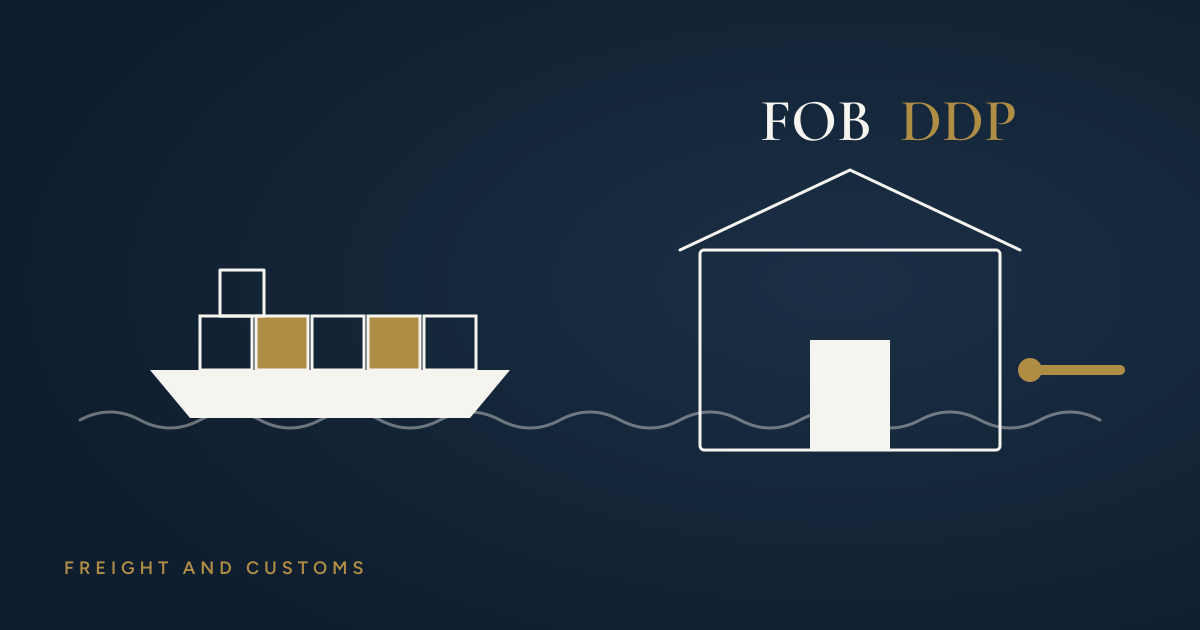
FOB and DDP sit at opposite ends of the Incoterms rules. One gives you control and visibility. The other gives you simplicity. Most brands start on one and should move to the other as they grow.
What each term means
FOB (Free On Board): the supplier delivers the goods, cleared for export, on board the vessel at the named port of shipment. From that point, the buyer pays the freight and carries the risk. A price quoted "FOB Ningbo" includes the product and getting it onto the ship at Ningbo, and nothing after.
DDP (Delivered Duty Paid): the supplier, or a forwarder acting for them, delivers the goods to your named address, having paid the freight, cleared import customs and paid the duties and taxes. You receive the goods and one invoice.
One technical note: under Incoterms 2020, FOB is meant for sea and inland waterway freight. For containers, FCA (Free Carrier) is often the more accurate term. In practice, most suppliers still quote FOB, and it's understood to mean "delivered to the origin port, export cleared".
What you control on FOB
- Freight: you choose the forwarder, compare rates, and decide between ocean and air, LCL and FCL.
- Customs: your broker files the entry, so you control the classification and declared value, and you keep the records.
- Visibility: you see every cost line, which means you can find and fix overspend.
- Timing: you book space and can prioritise urgent shipments.
The trade-off is work. You need a forwarder, a customs broker, usually a customs bond, and someone to manage bookings and paperwork.
What you give up on DDP
DDP is convenient, and for a first order or a small brand that convenience is worth something. But it comes with costs that are easy to miss:
- Bundled pricing. Freight, duty and fees come as one number, so you can't see whether any part is overpriced.
- A buffer for the supplier. The supplier is carrying freight and duty risk, so they price in a margin for it.
- Less control over customs. You don't choose the classification or check the declared value. If either is wrong, the consequences can still reach your brand.
- Importer of record questions. Find out who is named as importer. If it isn't you, you may not have the documents you need for audits, duty refunds or drawback.
Comparing the two fairly
Turn both into landed cost per unit at your warehouse:
- FOB: FOB price + freight + destination charges + duty + brokerage and customs fees + drayage to your warehouse.
- DDP: the DDP price, plus anything excluded (often final delivery appointments, liftgates or storage).
For regular importers, FOB with a good forwarder and broker usually comes out cheaper, often by more than the cost of running it. For one-off or very small shipments, DDP can win on time and hassle.
When to switch from DDP to FOB
- You're importing every month or two
- You ship full containers or close to it
- Freight and duty together are a meaningful share of your landed cost
- You want to claim duty refunds, use a bonded warehouse, or plan around tariffs
When those are true, the control is worth more than the convenience.
Frequently asked questions
Is DDP more expensive than FOB?
Usually, per unit. The supplier adds a margin on the freight, duty and clearance they arrange, and you lose visibility of what each piece actually cost. DDP buys simplicity; FOB buys control and usually a lower landed cost once you have a forwarder.
Who pays duty under FOB?
The buyer. Under FOB the supplier is responsible until the goods are loaded at the origin port; freight, insurance, duty and clearance at destination are yours, normally through your freight forwarder and customs broker.
When should a DTC brand switch from DDP to FOB?
Once you ship more than a few pallets at a time, or more than a few times a year. At that point a forwarder quote is almost always cheaper than the supplier's DDP price, and you gain control over timing and documents.
Want this checked on your own numbers?
Start with a fixed-scope audit of your invoices, contracts and inventory data, or bring us in to fix a specific problem. Either way, the first call is free.
Book a call